More than anything else I have worked with, soft pastels – by which I mean the dry, sometimes chalky ones, not the oily ones – really do create that stereotypical art studio chaos from which a beautiful painting emerges.
Everything in my life is now a little dusty. I’ve got an air filter I run, and I catch the dust on sticky tape, and I clean my hands with wet wipes, and i use damp rags for cleanup, and I never blow dust in the air or anything of the sort, but my god do these things get everywhere.
My workable is no longer white. i could probably get it back to white with the addition of soap and some elbow grease, but for now it’s a smudged grey, and that’s how it’s been for weeks. My chair is covered in colourful fingerprints; all my drawing implements are the same.
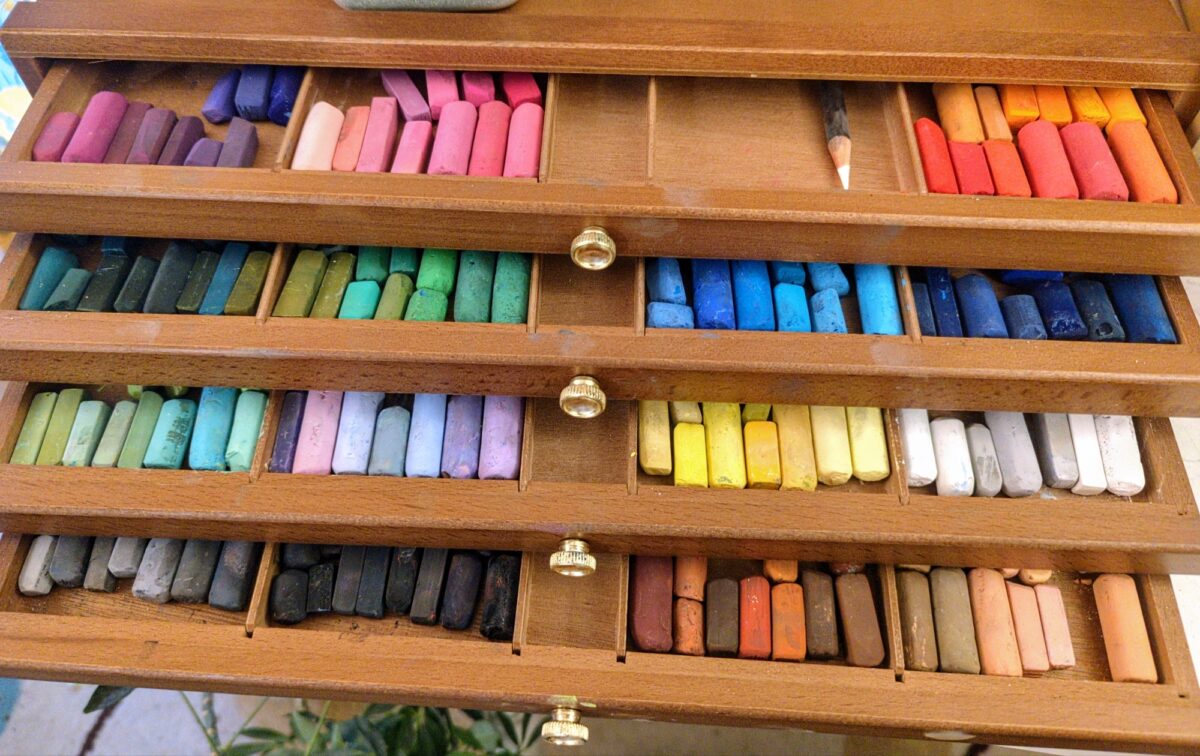
there is no end to the urge to collect these things; different brands have as many as 500 different colors available and it’s a problem. one of the ways I’ve capped my collecting urge with other art media is to limit my storage space, so I recently did good and get those wooden drawers with the hopes of making storing these easier, less messy, less destructive, and concretely finite in space.
The other unending quest is for a perfect substrate to draw with them on. The rag paper has been decent; and I’ve been experimenting with priming it with opaque or transparent watercolor ground, which does add further tooth. The opaque ground does seem to be much better, which is too bad because it’s nice to show off the paper colors underneath.
But there’s so many papers to try! and while most of them are hugely expensive, like pastelmat card and such, my friend did hook me up with a pad of mid-tone gray Canson XL sand texture paper, which I immediately made into a little sketchbook for myself and swatched all my colors into.
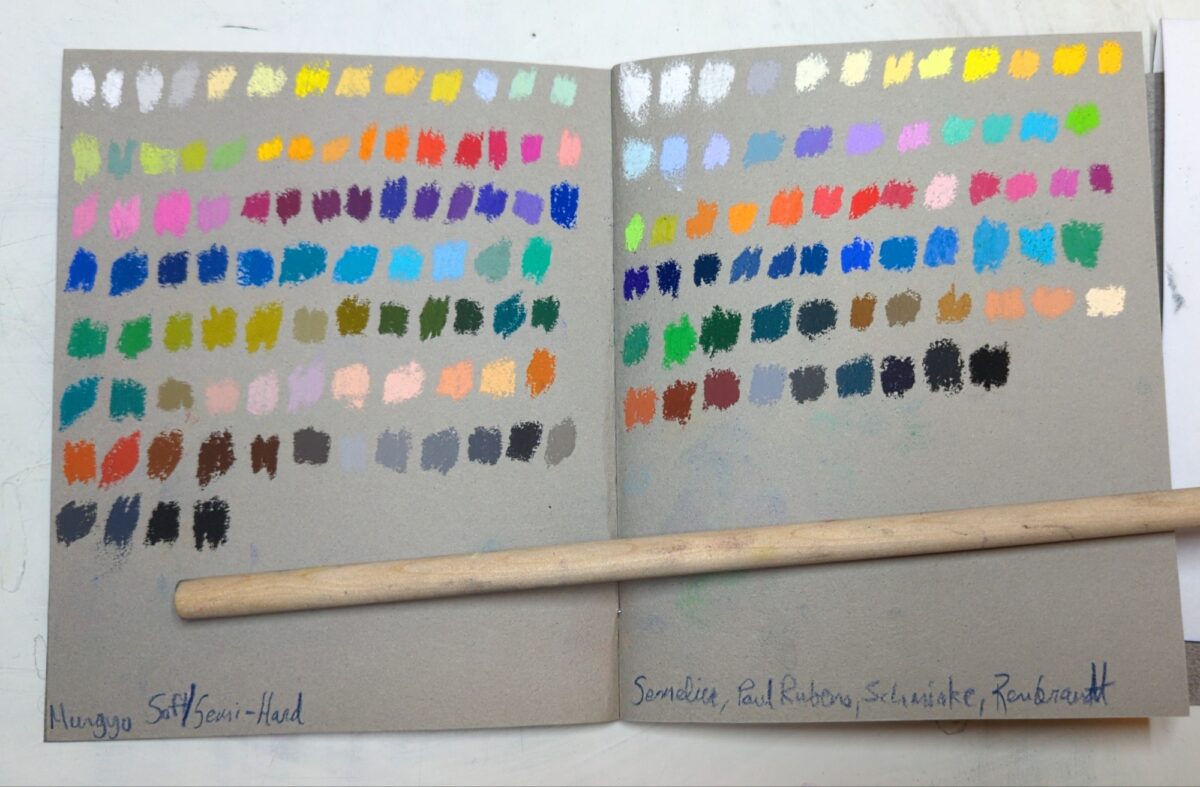
This paper doesn’t hold infinite pigment by any means, but it pulls pigment off of the pastel in a way the other paper I’ve used doesn’t, and might be a decent comparison to a sanded paper when it comes to figuring out how to make certain marks.
I also just picked up some proper pastel ground, so I’m sure I’ll be sharing results of those experiments here as well.
but back to the problem of the mess; my workspace is covered in pastel dust, I am covered in pastel dust and my poor pastels are also all covered in pastel dust! but thankfully a friend showed me somebody using cornmeal and sand as media to clean and store pastels cleanly within, and after a small controlled test I can only conclude that they are geniuses, and I need to go get my hands on some cleanable sand.
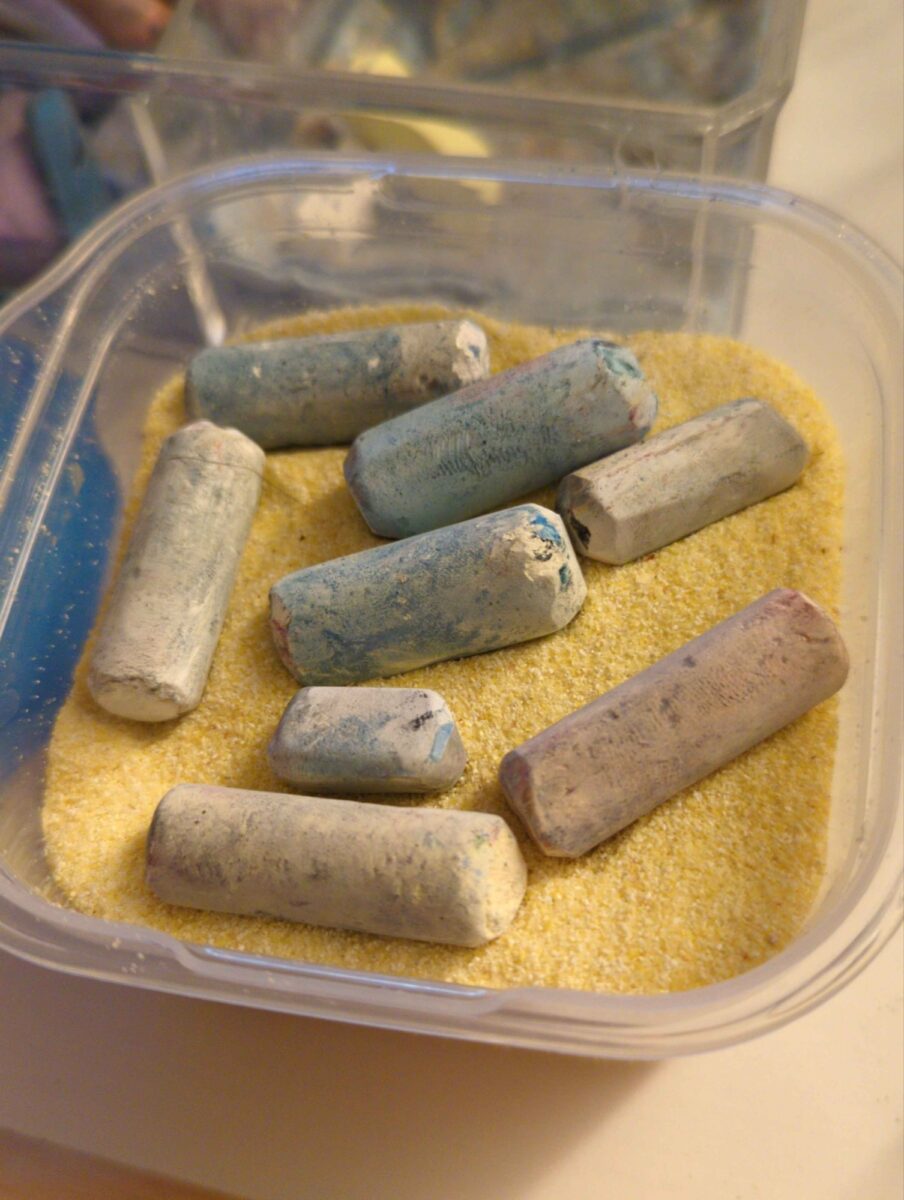
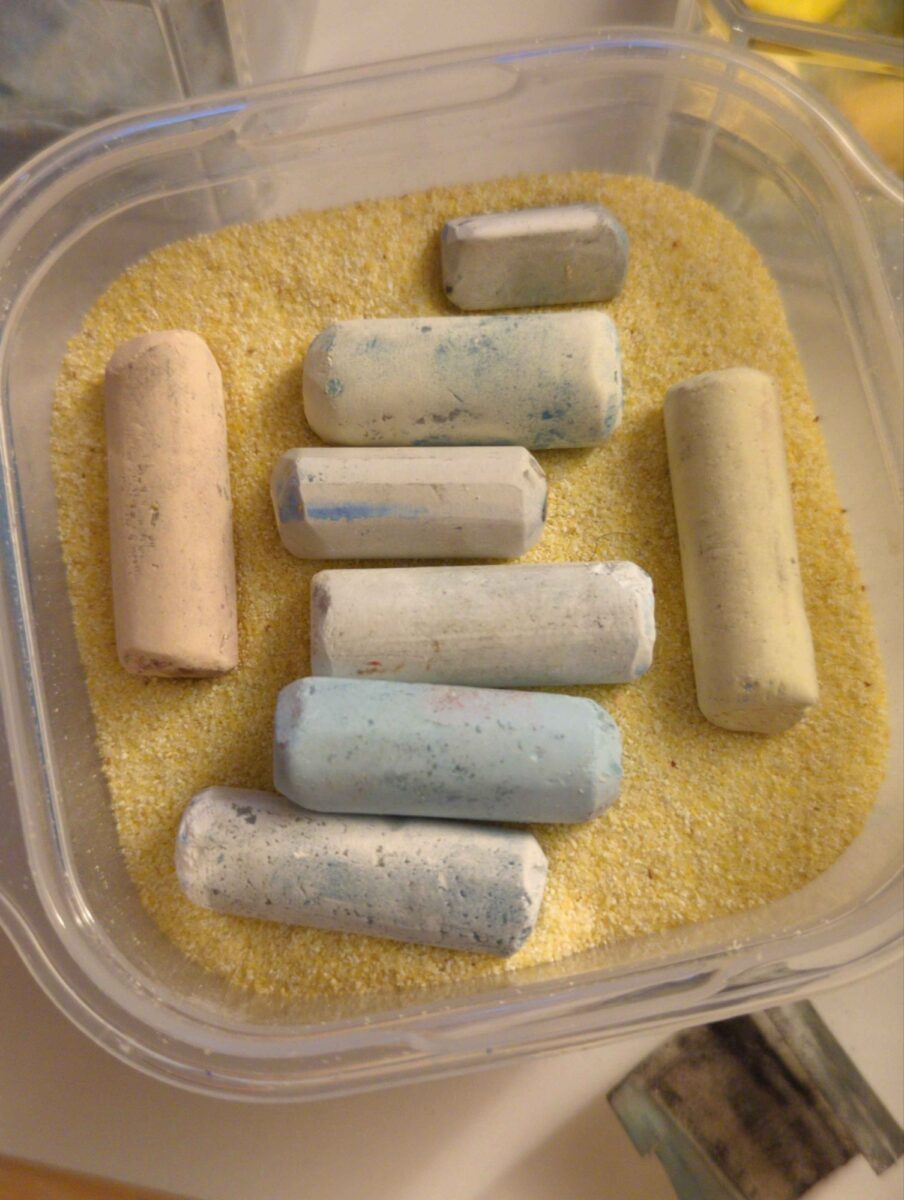
just shaking the pastels around in the corn meal does an enormously effective job on the soft ones of cleaning off all of the gray dust that accumulates on the outside of them. on firmer pastels rubbing them in there with your fingers and sort of pressing the cornmeal against them will get the job done as well. It’s saved me a lot of paper towel, and hopefully also a lot of breathing in any of that dust! since then I’ve upgraded to a larger container for cleaning the pastels, but I’m keeping this small tupperware for when I want to bring a bunch of them to life drawing or such.
I’m still exploring all the different types of pastels, all the different brands available, all the different ways to draw with them, and I got to say that they are a punishing medium, but not in the way I expected.
I think they might have the same problem for me that digital art can have; it’s too easy to overwork things. It feels completely reasonable to blend every single mark that I put on the page; and it doesn’t feel like there’s any reason not to use every single color that I have. except of course I know that better art comes from more controlled palettes and more intentional soft and hard edges, and I know that the papers I’m using have a limited amount of tooth and I can’t simply keep putting layers of blended and softened pastels on top of each other and then expect to be able to throw in one or two clean hard marks on top.
and then much like oil pastels, they really are not made for doing detailed work at a small scale, and I keep giving myself challenges that require that kind of stuff. The real secret is going to be to work larger, stand back from the work more, and stop trying to put tiny figures in my artwork. or at least, make them so tiny that they really can’t get rendered at all. now that I have this canson XL sandy paper hopefully I can work larger without feeling as stingy, and hopefully working with these, much like working with oil pastels, will help me remember to go abstract, be expressive, and play a lot more with my mark making.
I’ve also learned that these store well in those cellophane art bags, the kind you might get when you buy a fine art print from somebody. this is a huge discovery that is going to make it a lot less stressful to produce work and store it. now I can order more glassine paper just for my oil pastels, and hunt down some affordable cello bags for both my print sales and my soft pastels!
in summary, I’m having a great time and I super recommend giving these a shot if you are tempted as well. I think the best bang for your buck is probably the mungyo soft and semi-hard pastel sets; they have enormous ranges of colours and at least in Toronto there’s places that have open stock, allowing me to build a personally relevant palette. and then once you’ve learned how much you like these, you can join me in falling down the infinite rabbit hole of fancier, artist grade soft pastels from senellier, schminke, rembrandt and unison.
is it a bit of a curse that way? yes definitely, but who’s complaining?

Leave a Reply