
In honour of taking enough photos and spending the time to categorize them and crop them and geotag them and sort them into distinct observations to have crossed the 1000 observations milestone on iNaturalist, I wanted to pick up where the Exposure Therapy for Bugs post I wrote left off: photographing animals and plants and fungi and so forth has been an amazing new way of seeing the world and is absolutely expanding my mental horizons.

One of the things I both feel inherently skeptical of and also recognize as a central pillar of my worldview is anthropocentrism. by which I mean, I firmly believe that all living things have an inherent intrinsic value, and also a unique and essentially ineffable lived experience and, i guess, point of view. But I also know that my mind centers humanity, and also my mind can only actually perceive the world through my inherently human lens, and that I will never really be able to know what life is like for other living things. But I firmly believe that it is both complex and different, and that these differences are valuable and interesting and worth keeping in mind and being open to and respecting.

I think about this in relationship to pets, of course — dogs and cats and also birds and fish and hamsters and so forth — but also I am very interested in nonhuman intelligence in wild animals; in trees; in slime moulds.
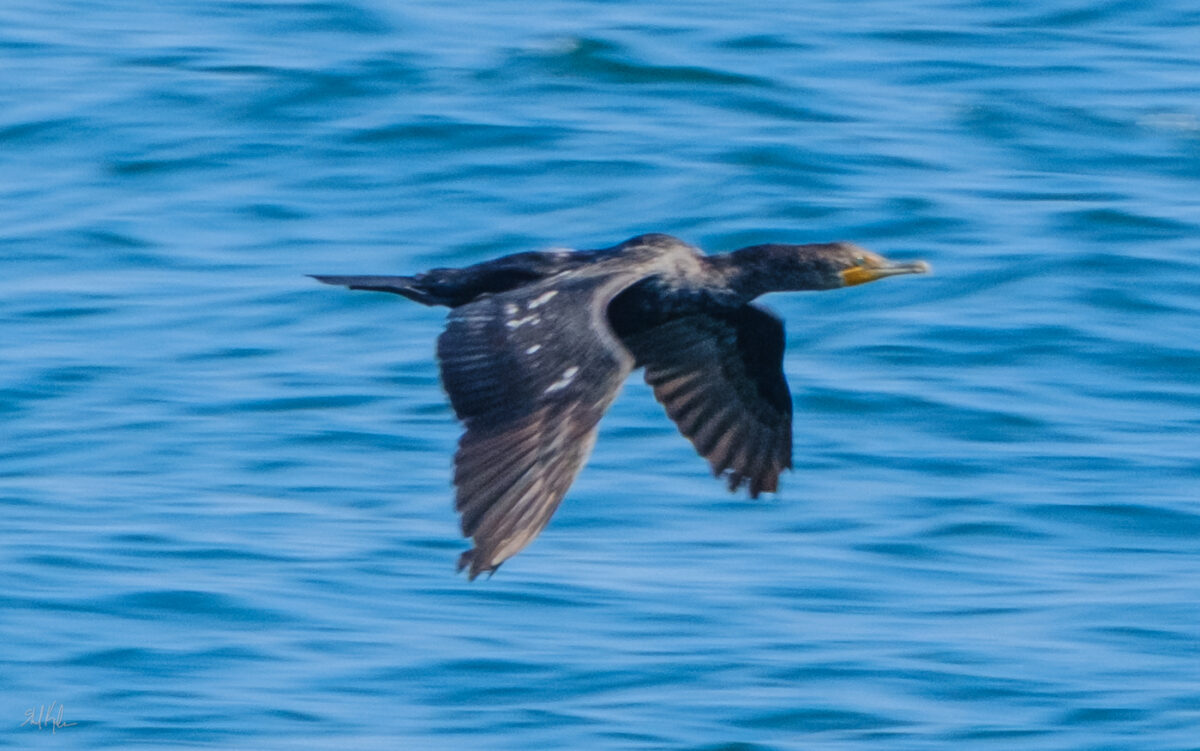
But I have had a somewhat surface level interest in ecology, to be honest, in that I memorized all our local songbirds as a small child, and have learned to id some larger flowering native plants on the highway verges, at least when in bloom, and so forth. But I didn’t really spend much time on invertebrates, or all the little weeds that invade our lawns, or such. But deciding to photograph for iNaturalist observations started to challenge me to pay more attention, to stare longer, to really look at what’s around me outdoors.

And its been magical! I stood still last weekend and stared at a huge huntsman/daddy long legs, perched nearly at eye level on a budding goldenrod, grooming itself. This thing is absolutely a gross-out bug for me, and I haven’t actually lost that response – their huge hinged legs and translucent chelicerae and clustered eyes are wonderfully creepy still! But also it was Just A Little Guy, y’know? It just needed to give its foremost legs a thorough wash.

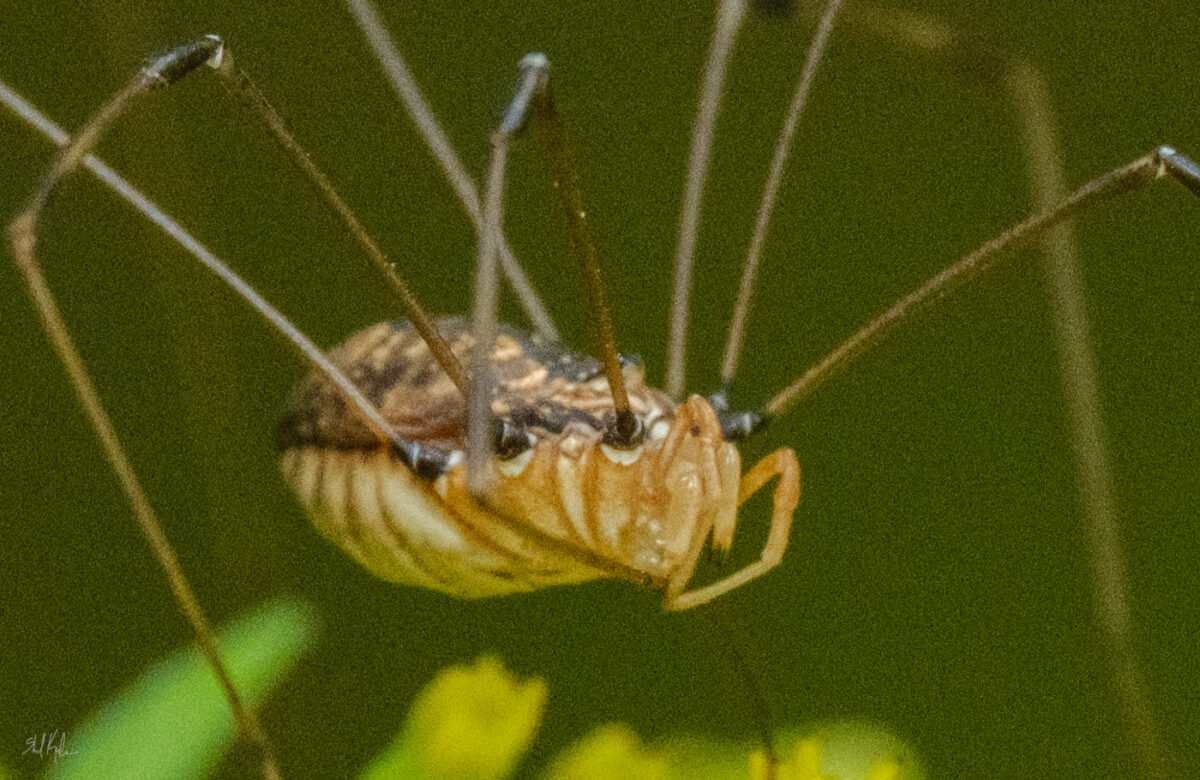

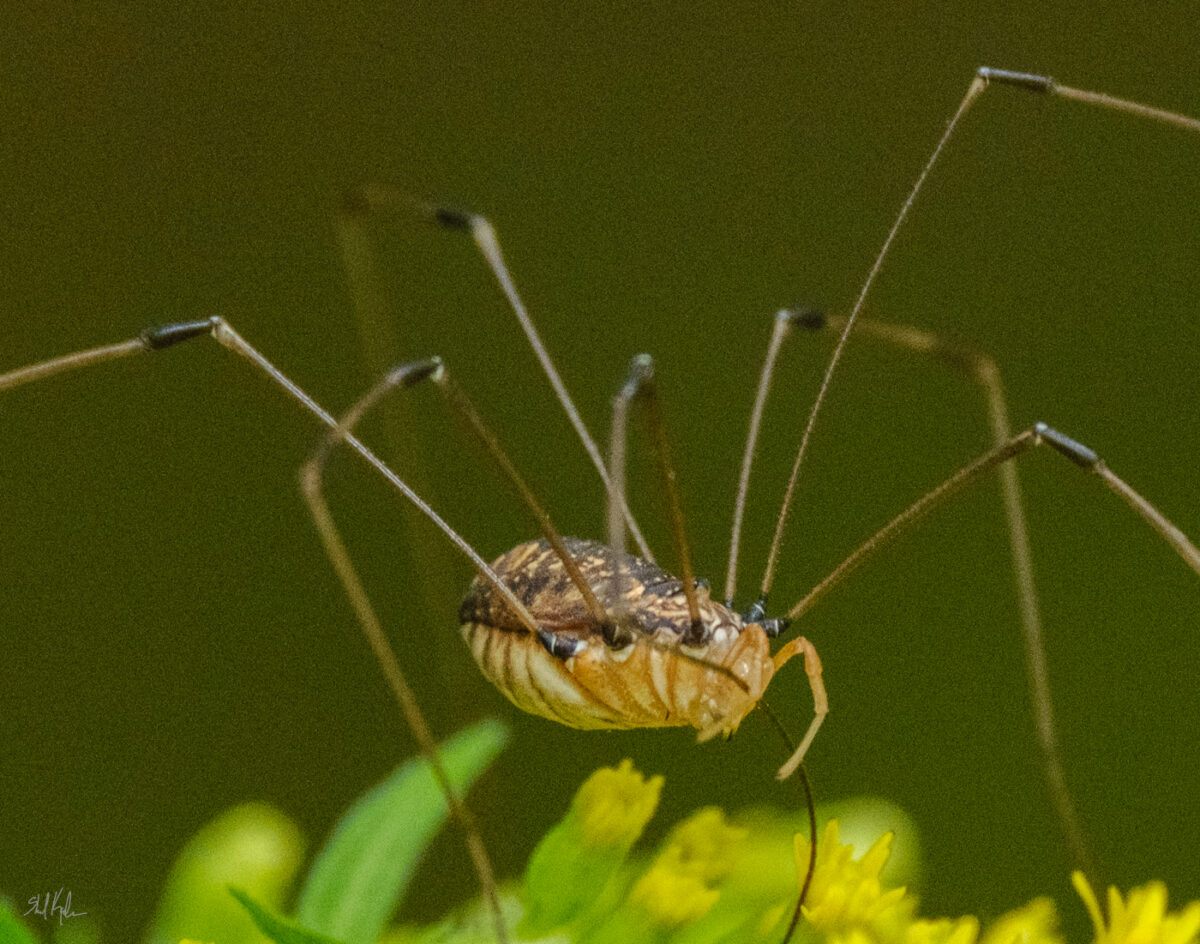
And then I stepped back and realized there were three others all just resting on goldenrod leaves within a foot of each other, which both gave me a brief hit of that overall creepy feeling of remembering that there’s always more bugs around than you think, but also proposed an intriguing question of why are they all here, all grouped up near each other, in the late afternoon? why goldenrod? are they gathering on purpose? And there are whimsical potential answers, the kind you can build a fairy tale out of, but also real scientific potential answers, and it’s a question that I can use to start investigating huntsman behaviour, or just a question to keep around mentally to remind myself that bugs are inscrutable little creatures and likely always more complicated than I think.

And this feels good to know! It also makes me feel bad if I kill a bug, and that’s hard because they are so small and fragile! But also some of them are very willing to fuck with me. Or my stuff. The eternal dilemma.

But to get back to the point of this post, it’s turned the outside world into a much more interesting place, and that feels enormously magical. If you’ve been tempted by iNaturalist or any other sort of citizen science initiative I super endorse trying it out!






Leave a Reply