
swap to chronological order of most recently modified
-

For our Dungeon World in the Shahnameh summer camp at the Aga Khan Museum, one of the challenges in the prep was writing adventures for up to four groups of players that kept them all wrapped up in Rostam’s Seven Trials, without tripping over Rostam or changing his story, and didn’t have them competing with each other or deciding some groups or GMs were doing things “wrong”.
I initially considered writing a single adventure and sending each group down the path on their own, as if each was playing their own playthrough of a videogame, but that’s ignoring some of the best things about tabletop games – collaboration and spontaneity. In the end, after a great brainstorming session with Daniel Kwan (who runs a huge collaborative multi-group epic campaign for kids at the Royal Ontario Museum) I came upon a shared map solution.
The way it worked was, I broke down the route that Rostam travels in the Shahnameh as he pursues his Seven Trials. He travels from Zabolistan, through several distinct regions, to Mazanderan, and fights a climactic fight in a cave in the mountains. For our campers, I decided that they too would travel this route, but always a step or two behind Rostam, so they could collect signs of his passing but not interfere with his story – instead, his story would interfere with their quests. And I ended up writing four adventure seeds for our camp, so that each group was on their own quest that didn’t have them racing or fighting each other for “win” conditions.
As I mentioned in an earlier post, it was a beautiful dream to think that groups of gamers would commit to a linear adventure path, especially kids, but having a strong motivation for them to get moving turned out to be enough to get them started, while the lure of the map they were all using kept most groups moving. I would draw the map on the whiteboard every morning and we would often go over our progress by citing things we’d found in each region, which kept kids focused on their travels and also allowed them to share narratives from their game with each other and for us all to discuss them. The other thing we did, which is pictured above, is take over a big bulletin board in the hallway outside our classrooms, divide it into the regions and let the kids make landmarks, monsters, PCs (player characters, NPCs (non-player characters) and other notable memories out of craft supplies and we stapled them to the board. This meant that even when players weren’t invested in the details of their own quest, they were still curious about and slightly competitive with the other groups when it came to making it to Mazanderan. This wasn’t a complete fix, but I think it did help the GMs keep their groups in known territory, even when the storylines were well off the rails.
These were my first adventures and I learned a lot from my own group as well as the other three GMs and their groups. The format I used was incredibly bare-bones – each adventure was given a plot hook, an NPC, a creature and a cool piece of treasure I statted out. Beyond that, they all shared the same regional breakdown, where each region along Rostam’s path was described and potential encounters and discoveries were listed, as well as a few signs of Rostam’s passing that the GMs could sprinkle in to remind the players of their connection to the story. I got this idea from Jason Lutes’ “Perilous Almanacs”, a Dungeon World-friendly collection of regions described via their contents, all nicely laid out for GMs to grab what they liked from. To keep continuity, the GMs and I would have a short meeting at the end of every day. If anyone’s players burned down, say, a castle, we’d all hear about it and only castle remains would be found by any followup adventurers. I think, in future, more hook-specific writing, more fleshed out statistics for a wider range of encounters and way more possible side quests and such would really flesh out potential adventures for group like these, where everyone was new to the idea of gaming but also easily distracted.
Now I wrote these adventures for the museum, so I can’t share all the details with you, but next week I’m going to talk a bit about how we used the museum’s exhibits, artifacts and the story alongside arts and crafts to flesh out the educational aspect of the camp and also help immerse the kids even further in the game. That will probably be my last post on this subject, and we’ll return to your regularly scheduled research posts – thanks to everyone on my Patreon for making these possible!
-
For the Aga Khan’s Dungeons and Dragons camp they wanted to go above and beyond a basic DnD game and take the kids into a very specific world – the world of the Shahnameh.
The Shahnameh is the longest epic poem (by a single author) known, written by the poet Ferdowsi about 1000 years ago. It tells the story of the mythic, legendary and historical past of the Persian Empire, from the creation of the world forward to the arrival of Islam in Persia in the 7th century, and introduces us to kings, demons, triumphant and tragic heroes throughout time. There is more than enough in the Shahnameh to create an incredible world for kids to game in, but what we were lacking, unfortunately, was time.
Because this was a pilot program, we had to focus in and be efficient in creating a world for a week’s worth of play, without spending time on things we weren’t going to get to. In the end, I had about two full days to prep things, so I really had to prioritize, and thankfully the museum staff had some great suggestions.
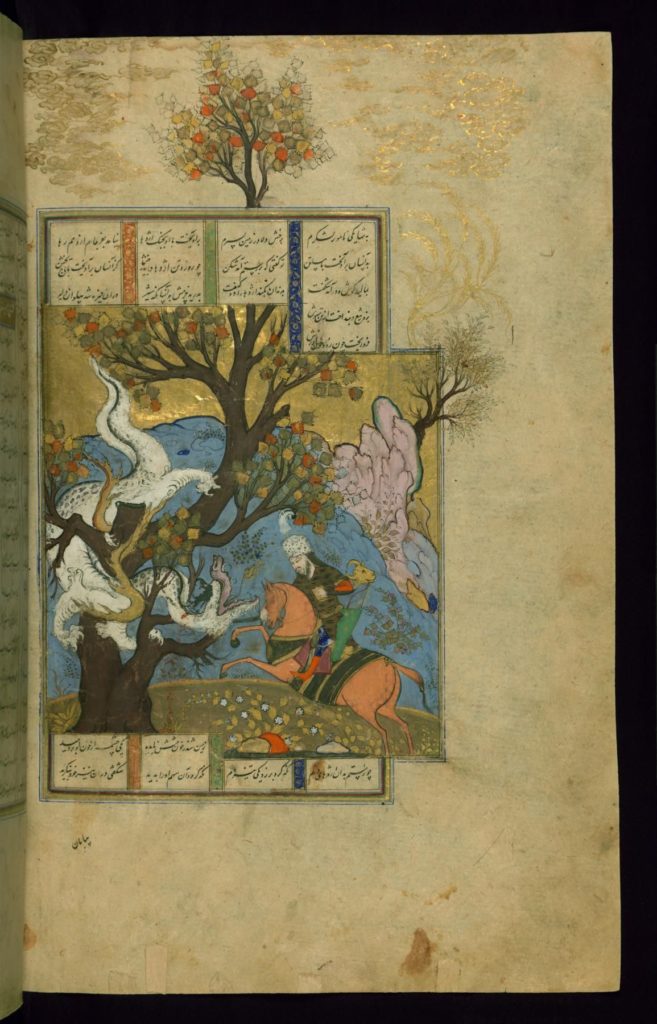
(image “Rustam Kills a Dragon” – from the folio created by scribe Muhammad Mirak ibn Mir Muhammad al-Husayni al-Ustadi, courtesy of WikiMedia) Firstly, they chose a specific story for us to hinge the campaign around – Rostam’s Seven Trials (also known as Labours). Secondly, they were able to provide me with a kids’ adaptation of a few of the key stories of the Shahnameh, including the Trials, which gave me not only a quick introduction to the poem, but also helped me get a sense of how to adjust things for the kids. I also had access to museum staff who had studied and read all of the Shahnameh, which was incredibly helpful and, I think, important, because if you haven’t put it together yet, I was a white woman running a program at a museum about the history of Islam for a majority POC group of kids, set in the world of a poem that has survived a millennium as a cornerstone of Persian history, culture and nationality. It felt really important to use as much of the time I had as I could to talk to experts, and I’m really grateful they were available to me – I only wish I had been able to make better use of the resources they were able to get to me.
So, given the time I had, here is what I focused on to bring the setting to life for the kids.
Firstly, I provided a huge list of Parsi names, so that players and GMs could choose names that belonged in the world of the Shahnameh. Because some of our players were Persian, there was some overlap between fictional names and player names, but this didn’t seem to push them out of the game at all – they seemed excited by it. I was less worried about the players and more worried about the GMs, though – all of us with a grounding in Tolkeinian fantasy have a persistent background radiation of fantasy name parameters that can either ignore Middle Eastern or Asian names or use them in explicitly orientalist ways. Having a list of names we stuck to helped us avoid slipping that error into our games.
The next thing that seemed important was to set the stage of the setting with some visuals. There’s a wonderful scholarship that has connected much of the setting of the Shahnameh with real world cities, and I was able to find images of the six main environments we were dealing with to help bring the kids into the world. Not every setting had a clear real world parallel, so some guessing had to be done, but I tried to keep things local to the areas we did know. Visuals worked AMAZINGLY, visuals are the best, I am going to spend a LOT more time on visuals in future campaigns. I wish I’d had a lot more visuals of architecture, clothing, armour, weapons, animals, people, monsters and so forth, to be able to bring things to life at the table.
The next thing I did was go through all the player-facing information – their character sheets, the lists of moves and so forth – and wipe out anything too Tolkeinian and replace it with Persian counterparts. This was a surprisingly nuanced and complex process I wish I had spent more time on – whether it was the deities the Acolyte dealt with or the magical swords the Fighter used, I had to make sure I at MINIMUM renamed them so they weren’t all “Eowynia’s Blade” and “Thorsson God of Lightning” and so forth. Thanks to Daniel Kwan’s suggestion, we also filtered the classes so that the only magic available was healing and light magic, no wizardry, because in the Shahnameh magic is the domain of demons, and chaos, and we wanted to keep magic scary, surprising and (probably) evil in the eyes of our players. This gave the world a very sword and sorcery feel, honestly, which is definitely in my wheelhouse, and seemed to work fine with the kids as well. Being their first RPG experience was a privilege that way – no one knew enough about wizards to be upset they couldn’t play one.
I also plotted out four campaigns, but I’ll get into that in my next post.
The biggest challenges of building a setting from the Shahnameh, besides just the sheer size of it, was that it focuses on kings and heroes, gods and demons, and is missing a lot of the granular, day to day, on the ground kind of information that brings a game setting to life for the players. If I’d had more time I would have liked to do a lot more research into not only the Shahnameh, but also into a few different eras of Persian history from an archaeological and anthropological standpoint, so I could have a palette of currency, clothing, cultural mores, social roles, songs, jokes and more for the GMs to work with. As it was, we did our best, but I worry about how much that eurocentric Tolkeinian fantasy background radiation crept through, and would like to spend more time tightening up our setting in future.
All in all, though, it was an exciting challenge, I learned a lot and the kids seemed to get into it in a big way, especially since their campaigns were following in the footsteps of Rostam. But I’ll tell you all about those campaigns, and Rostam’s Seven Trials, next post!
-

Gaming with kids was new to me – I’ve gamed with a lot of adults, and with folks who are new to gaming as well as experienced old hats, but kids was different, and not necessarily in a bad way! Firstly, I’d say that over half the kids were immediately ready to take the game seriously and get invested in the story, despite never having played something like this before. And by the end of the week’s 9 gaming sessions, I don’t think there was a single camper who didn’t care about their character, their quest and their teammates. Here’s an exploration of the challenges we faced as we ran the game and some of the greatest successes, as well:
Challenges:
Over the course of the week it became obvious that most of the kids did not differentiate between themselves and their characters – they weren’t acting like someone else often, and it took a long time to get them familiar with their class-specific skills and attributes. In future, I’d love to start a program like this off with some basic improvisational warmups, to introduce the idea of acting and being “in character”, and then spend some time getting each player to break down their stats and character info into notes for themselves on what kind of person their character is.
On the same note, while creating the bonds was a lot of fun as part of the character creation process, the kids largely seemed to ignore them or feel hampered by them as they got farther into the story. It might be better with a crew of new roleplayers to let the bonds emerge naturally in play and make sure to record inciting events when they happen, giving the kids more investment in the bonds themselves.
As I mentioned in my previous post, it took a little while to sell all the kids on the fact that if they said it happened, that meant it happened, and they were going to have to deal with the consequences. Every GM found their own balance between asking “really?” when kids were being impulsive or sarcastic, or saying “if you say so!” and then enforcing the consequences of said sarcastic or impulsive approach.
Dungeon World does not include initiative order or taking turns in the ruleset, but the best advice I got leading up to the class was that kids would need that structure, so I imposed it immediately upon my group. I was looser with it when kids were exploring, but for combat we went around the table rigidly, and the turn order could only be adjusted by players willingly forgoing their turn in favour of a teammate getting to do something faster.
Dice was an even bigger deal, I think, than the turns, and I definitely made the mistake of not laying down universal dice management rules at the get-go. In the end, each table found their own best practices – for mine, kids had their own pair of d6s, but could only roll them in a felt-lined bowl (this kept dice on the table) and damage dice were shared and stayed in the middle of the table. We had a few talks about rolling or playing with dice when someone at the table was talking or doing something important, and after a few sessions my group got the hang of it, were more focused and were making less distracting dice noise.
Keeping kids aware of and focused on the story of their game was a struggle as well. We gamed twice a day, and even though the sessions were only two and a half hours apart, we always had to recap. Some groups were more invested in the story from the get-go and made sure to keep track of it collectively; others, like my group, were split – half of them were obsessed with every plot detail, while the other half were detached unless things were actively happening, and needed constant reminders of who their allies were, and what clues or treasure they had. One thing that really helped with this was the journals the kids made on the first day, but I’ll go into that further in a future post.
The final challenge was the most predictable: players were not equally committed to their individual quests and any efforts towards running linear campaign experiences were futile. That said, we knew that was coming and the GMs handled everything very well. Since the campaigns were all following the Shahnameh, even when the kids stopped caring about their particular quest, they could look to the shared map on the wall and still felt interested in getting to the far side of it, which I think helped a lot. This is another thing I’ll talk about more in future posts, but FYI, thank goodness for maps.
It wasn’t all challenges though! Here are some of the greatest successes:
While I was concerned that the three GMs assisting me were not experienced at GMing, it turned out they all brought fantastic experience with educating kids, oral storytelling, improvisation and making the most of the museum space to our games, which was a huge help with the camp as a whole, and specifically in the context of GMing. For example: where I had trouble getting all four players to listen and focus when I described something important, another GM had the wise approach of getting his kids to all close their eyes and visualize while he described something. Frankly, I’m using that trick for my next adult game, it worked so well.
Another of my GMs recommended on the first day that we try and assemble gaming groups out of kids who didn’t know each other very well, as opposed to putting siblings or close friends in the same game. This sounded almost cruel to me, but I could see the wisdom in helping kids start fresh, socially, in their gaming group, and I think it worked out really well in the end.
And while we did have a few kids who were reluctant to play, or to get invested in the game or take charge in specific situations, the class system meant the GMs could easily create situations where only one player could solve the problem, thanks to their specific skillset. Making reluctant players necessary to the group’s success helped them invest and feel important. For other reluctant players, they knew their role and didn’t resist doing what was mechanically necessary, but took longer to become invested in the story. I found what worked best in my group was giving them a common enemy – not just a vaguely evil NPC or monster in the distance, but a constantly present NPC who was being cowardly, lying to the group, screwing things up in ways that sabotaged them, and generally being a problem no matter what they tried to do. When they all rallied against her, even my most reluctant players became invested in seeing the quest through and dealing with her frustrating behaviour.
While there were a few kids who were so quiet, we had trouble telling if they were enjoying themselves while they played, by the middle of the week their parents were sharing with us the stories they’d been told by their kids after camp each day, and it became clear that even the quietest players were excited to be a part of the game.
The biggest success, though, and the most exciting aspect of gaming with kids, was watching each group learn to collaborate and work together as a team. As they learned more about what each class could do, players would delegate different tasks to one another. As they expanded the stories of their games, players would keep each other up to date on clues, developments and plans. And when the going got tough, players became experts at quickly planning battle strategies with an understanding of each player’s skills and strengths, the order of the turns, and what kinds of monsters they were up against. Players also became the GM’s best friend at catching impulsive, sarcastic or dismissive comments from one another before they became Game Reality, reigning one another in and keeping the focus on the group’s goals and safety. It was thrilling to see the kids both take on the responsibility of creating the story they wanted, and to collaborate and delegate creatively while they did it.
We played before lunch, and at the end of every day of camp, and even though we’d all been on our feet, running around after the kids or improvising gameplay with them, all four of us GMs were often a little euphoric at the end of each day, thanks to the amazing energy the kids brought to the gameplay.
So yes, it was awesome, and I would 100% recommend trying gaming with kids.
Thanks again to my patrons who make these posts possible!
Next week’s post will be on whirlwind setting design and writing four campaign seeds that share the same map, follow in the same hero’s footsteps, and have room for all the chaos of gaming with kids.
-

(image above is the Dungeon World GM Screen, drawn by Nate Marcel) (more…)TLDR: It was great! Highly recommended. Learn more about Dungeon World here!
The first thing I asked the kids was whether they were familiar with Dungeons and Dragons, and not a single one of them raised their hand. After digging around pop cultural references with them, the closest thing they could think of was the game Dungeons, Dungeons and More Dungeons, from Gravity Falls. I figured that was a fine starting point.
When I was choosing what system to use with the kids, I had a few things to weigh – first of all, what kind of game play would be fun for kids both 9 and 12 years old (or 8 or 13, as sometimes we have kids right on the cusp sneak in); secondly, what would be a reasonable game to expect three new GMs to learn in a few weeks, especially when their own gaming experience was varied; thirdly, what game was flexible enough to be edited and adjusted and warped to fit the setting I was creating based on the Shahnameh. Finally, we had a fixed budget for the program, and I couldn’t expect them to order a whole suite of $40 players’ guides, dungeon masters’ guides, bestiaries or such. We needed something lightweight, compact and flexible, and Dungeon World turned out to be just the trick!
-
In July I spent a week running a Dungeon World campaign as part of summer camp for 16 kids, aged 9-12, at the Aga Khan Museum in Toronto. It was my first longer campaign that I’ve designed, and the three assistants I had (who were amazing, thank you all!) had never run any tabletop RPGs before whatsoever. I’d been recommended by the excellent Daniel Kwan, who runs Pathfinder and DnD 3.5 for kids 11-14 at the Royal Ontario Museum, which you may have heard me raving about on Twitter in the past. It’s a really cool program, and it’s thanks to him that I got the chance to run this one at the Aga Khan Museum!
While Daniel was incredibly helpful and supportive and offered a lot of information on how he ran his program, the age difference between his kids and mine meant I couldn’t use the same system. Additionally, the Aga Khan Museum didn’t want a generic fantasy world for their kids, they wanted to use the game to introduce them to the world of the Shahnameh, a thousand-year-old epic poem covering the mythological and historical past of the Persian empire prior to the arrival of Islam in Iran. It’s an amazing piece of literature on many levels, the first being that it is the longest epic poem ever written by a single person. As I mentioned in a research post earlier, I relied on a kids’ adaptation to be able to parse the poem into key segments for the summer camp, and without that I would have been completely overwhelmed.
So in the end, we divided the campers into four groups of four, each with a staff member as Game Master, and each group followed their own special quest over a shared landscape, which was also shared with the story of Rostam’s Seven Trials, from the Shahnameh. We used the museum’s resources and collection to flesh out the world for the kids, and enable discussions about animals and monsters, heroes, clothing, treasure and stories. We worked on daily crafts that helped us get deeper into the subject matter and share what everyone individually found the most interesting. And we all had a really great time! So over the next three posts I’m going to dig into each aspect of this project, and share what was exciting, interesting, challenging and hopefully inspire you to try something similar sometime!
-
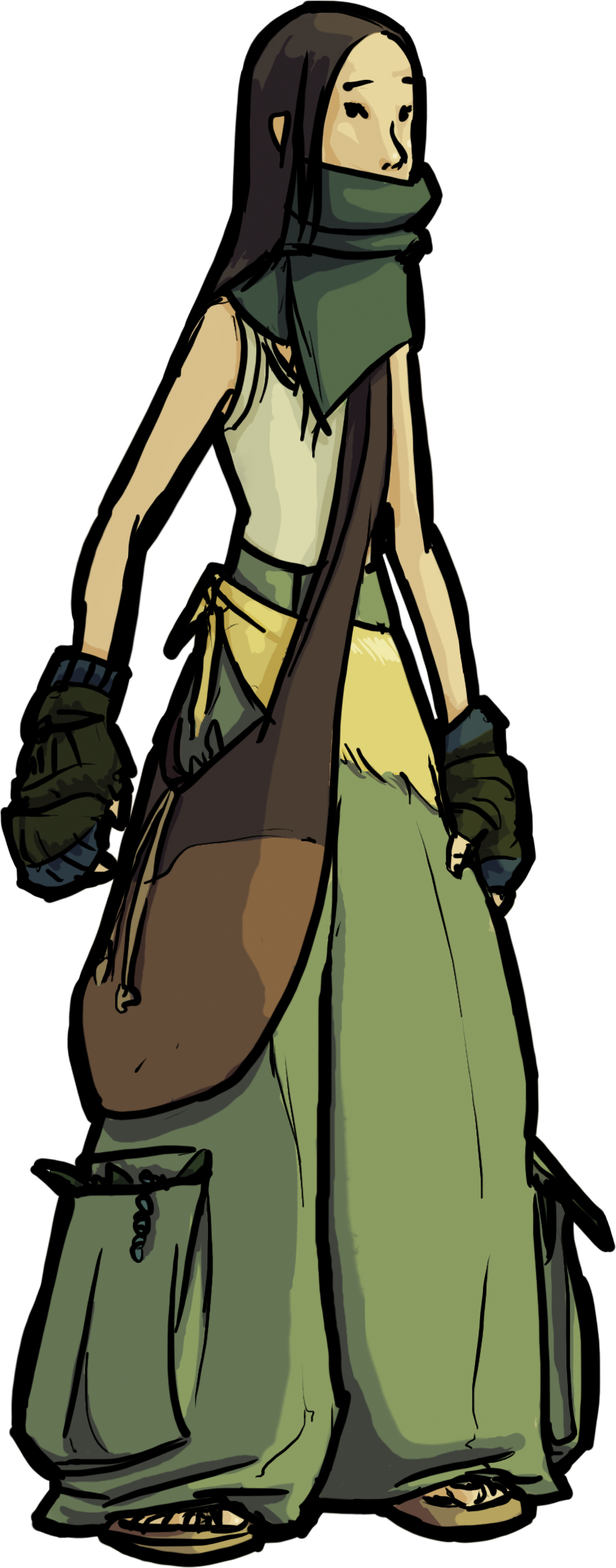
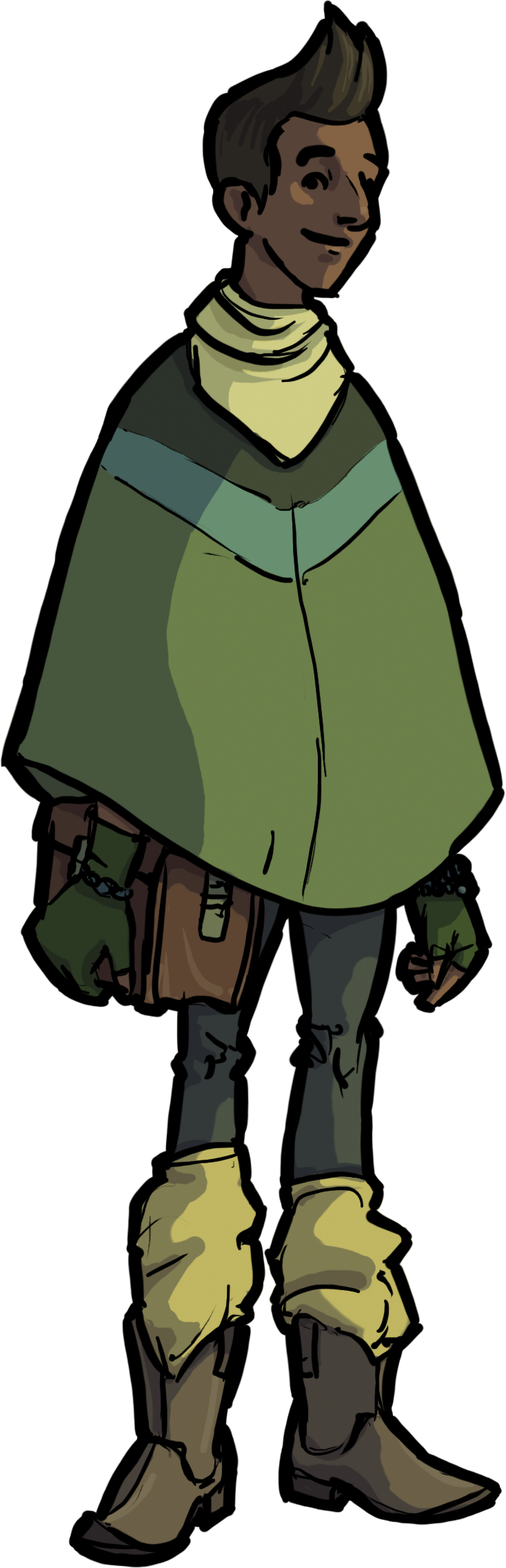
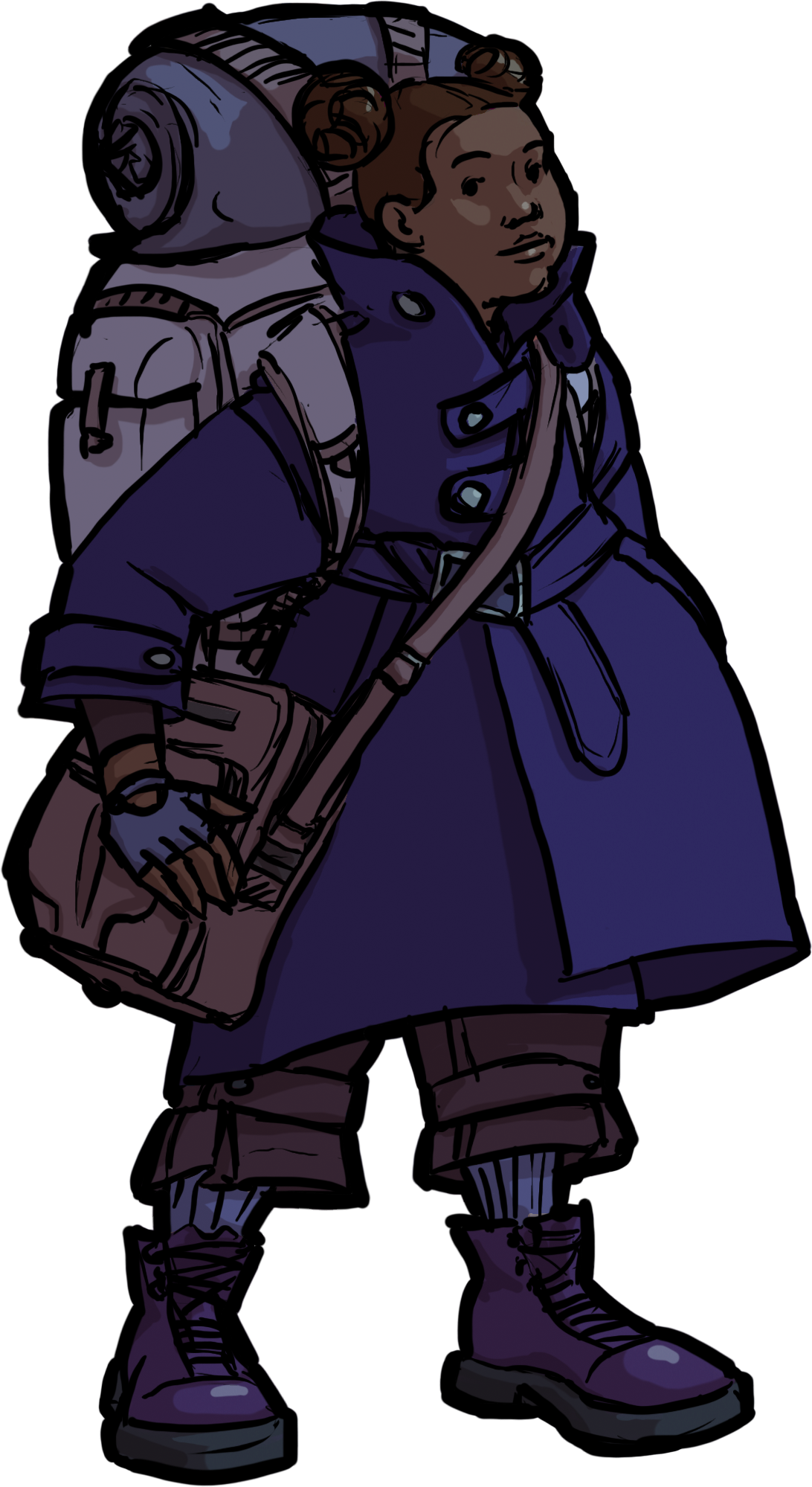
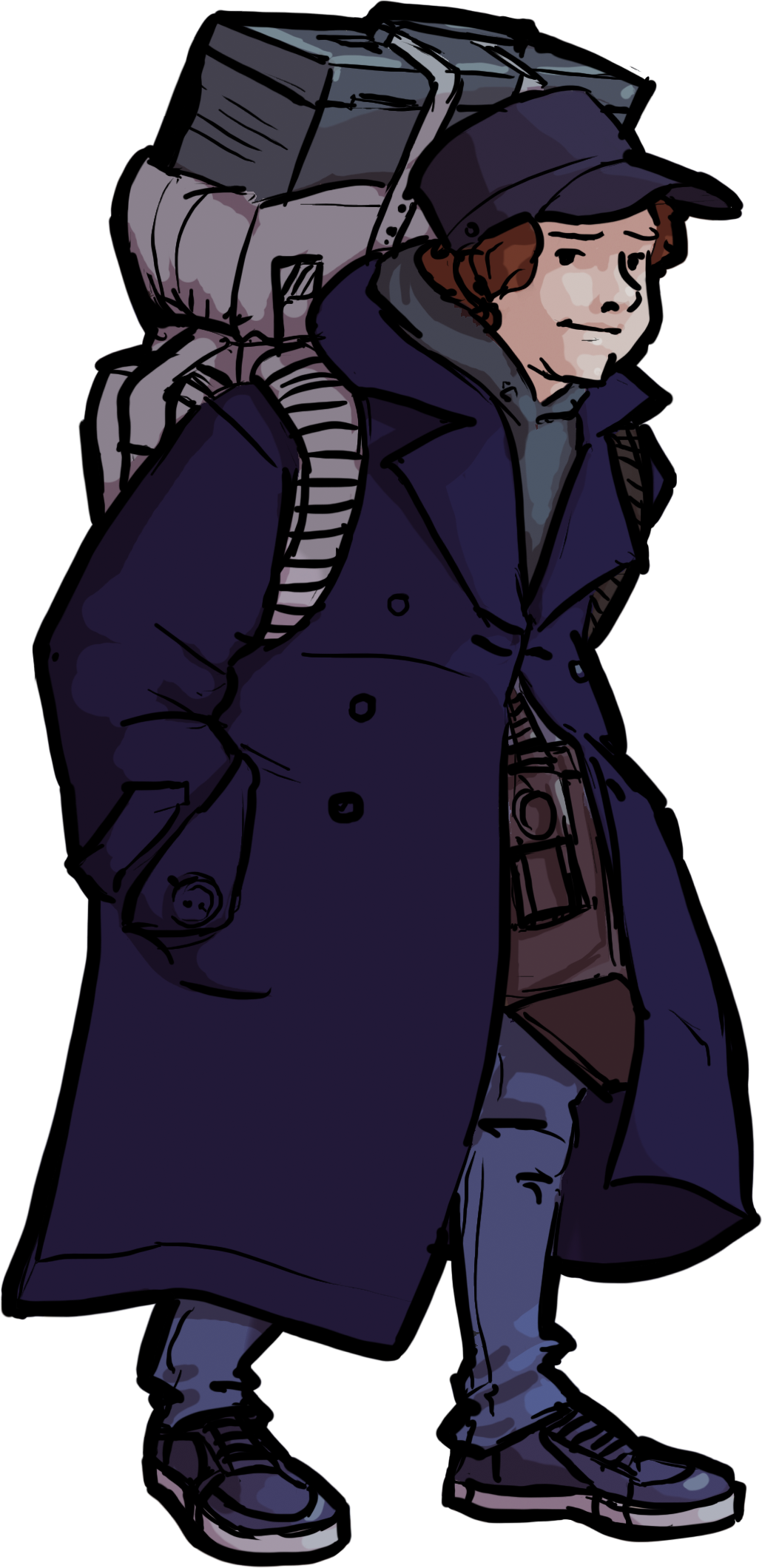
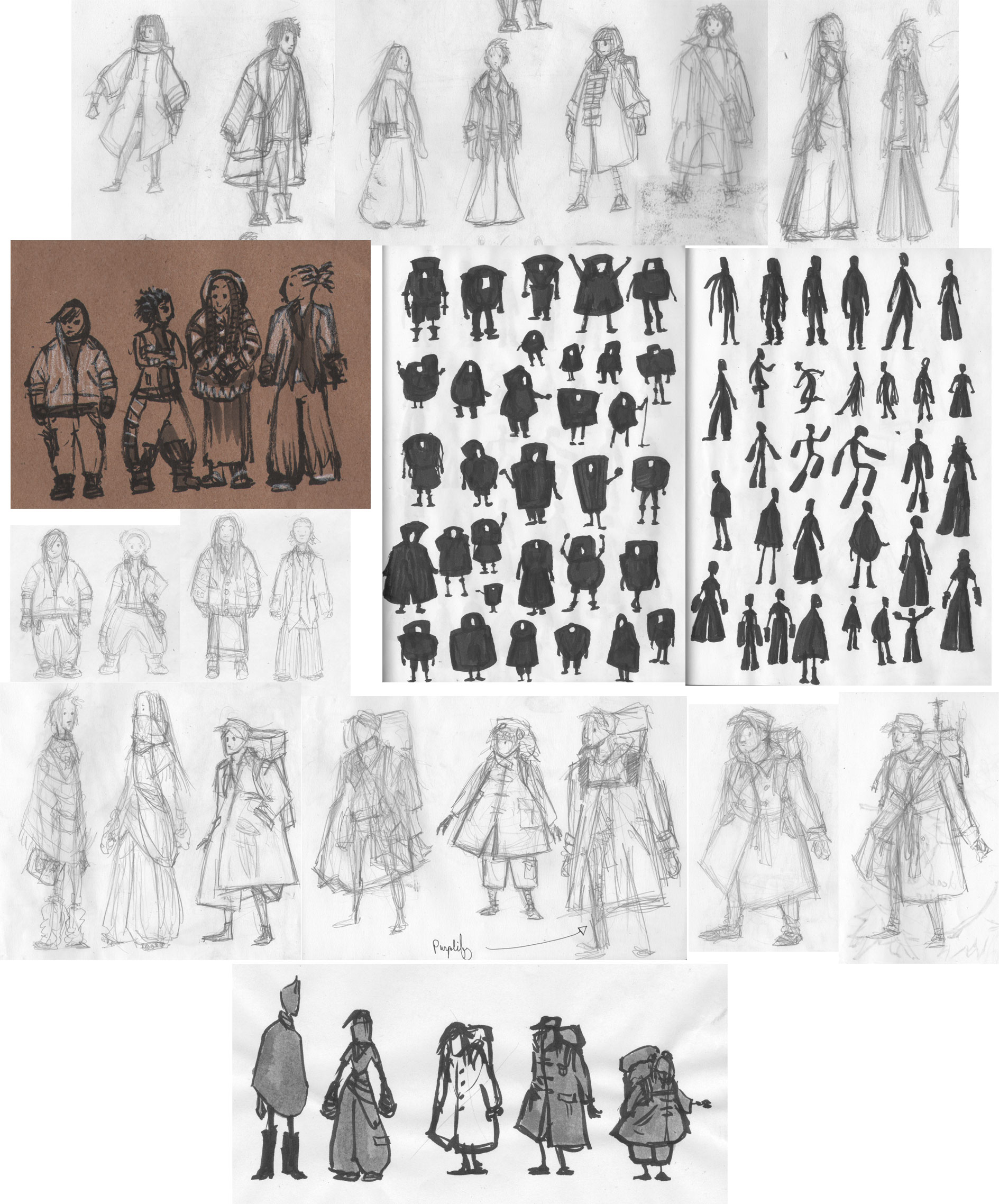
Digital design lineup of four spunky teens off to investigate spirits in their city. Below are some of the process pages used to develop four complimentary designs, focusing at first on shape. Earlier development sketches available below.
-
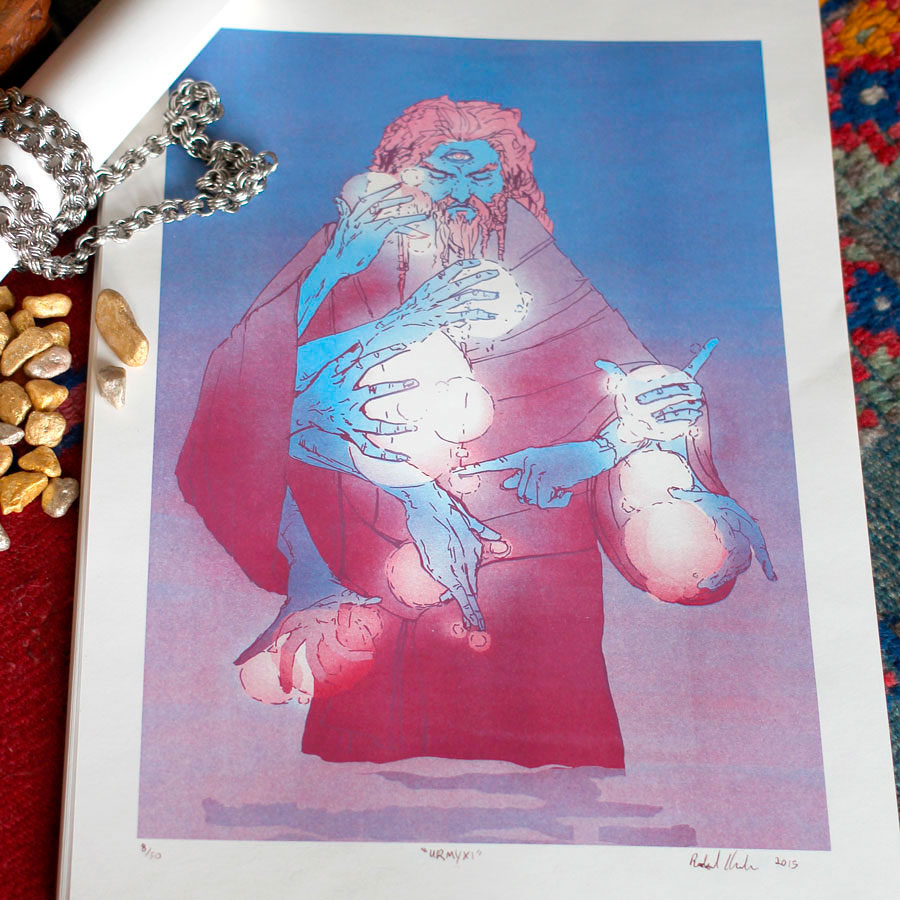
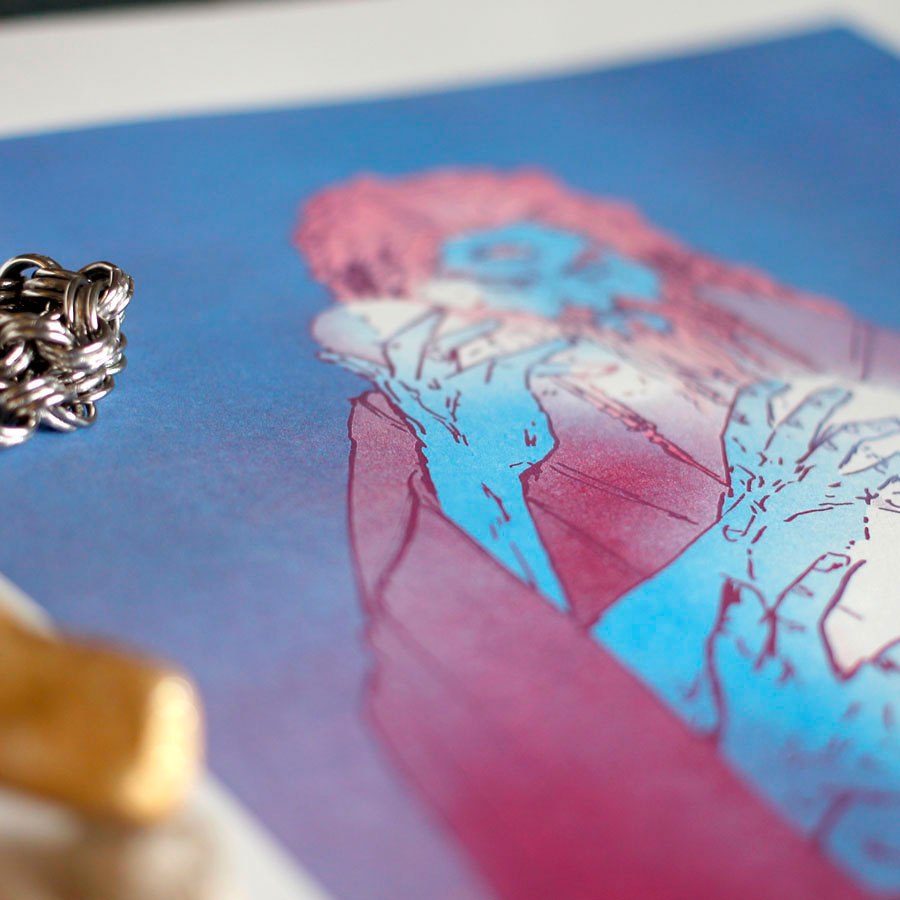
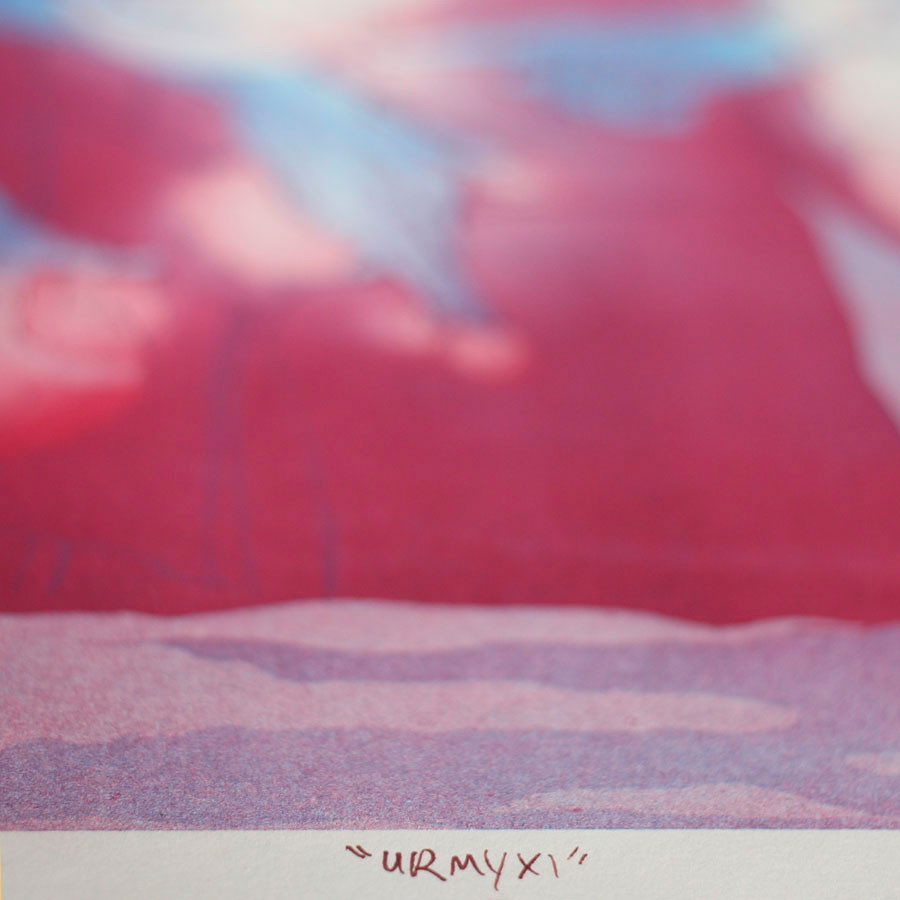
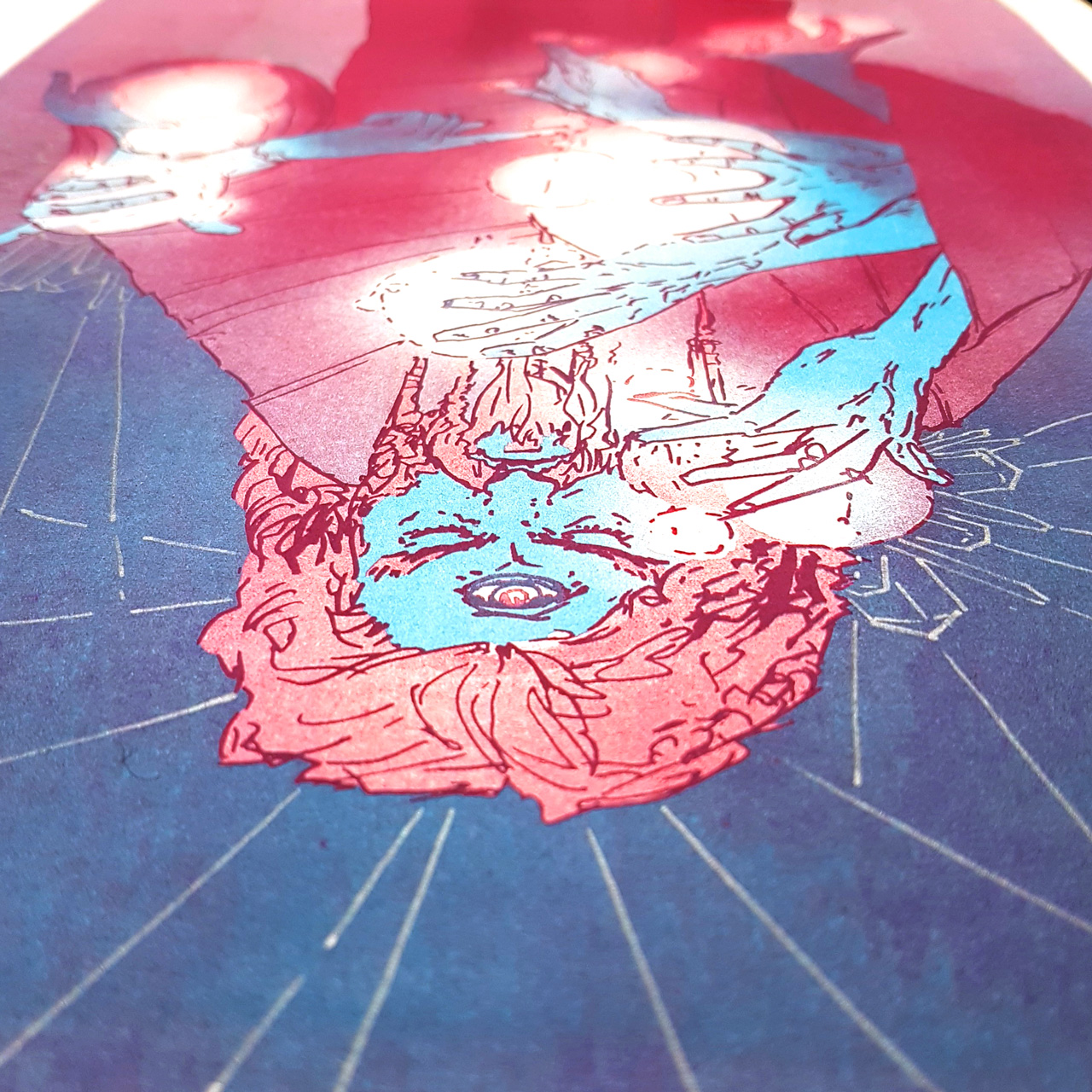
Fantasy illustration of a powerful wizard generating multiple selves through chronomancy, centred around an all-seeing third eye, glowing with power. Drawn in ink, separated in Photoshop, printed by Colour Code Risography.
The photoshop file really doesn’t tell you how magical the risograph will be, but if you’re curious:

Detail shots of the print – and some of the silver accents I added for folks who wanted them – follow below:
-
Orin and the Dead Man’s Sword is a one-off, 24 page, wordless fantasy comic about tripping across a cursed sword while lost in the forest. It was printed in 2014 in a split LP style Weald Comics anthology, and reprinted in 2017 as a risograph book. You can read the whole thing on Stories alongside Adin’s accompanying adventure.


-
Gouache, painted on site or from my own photos.


-
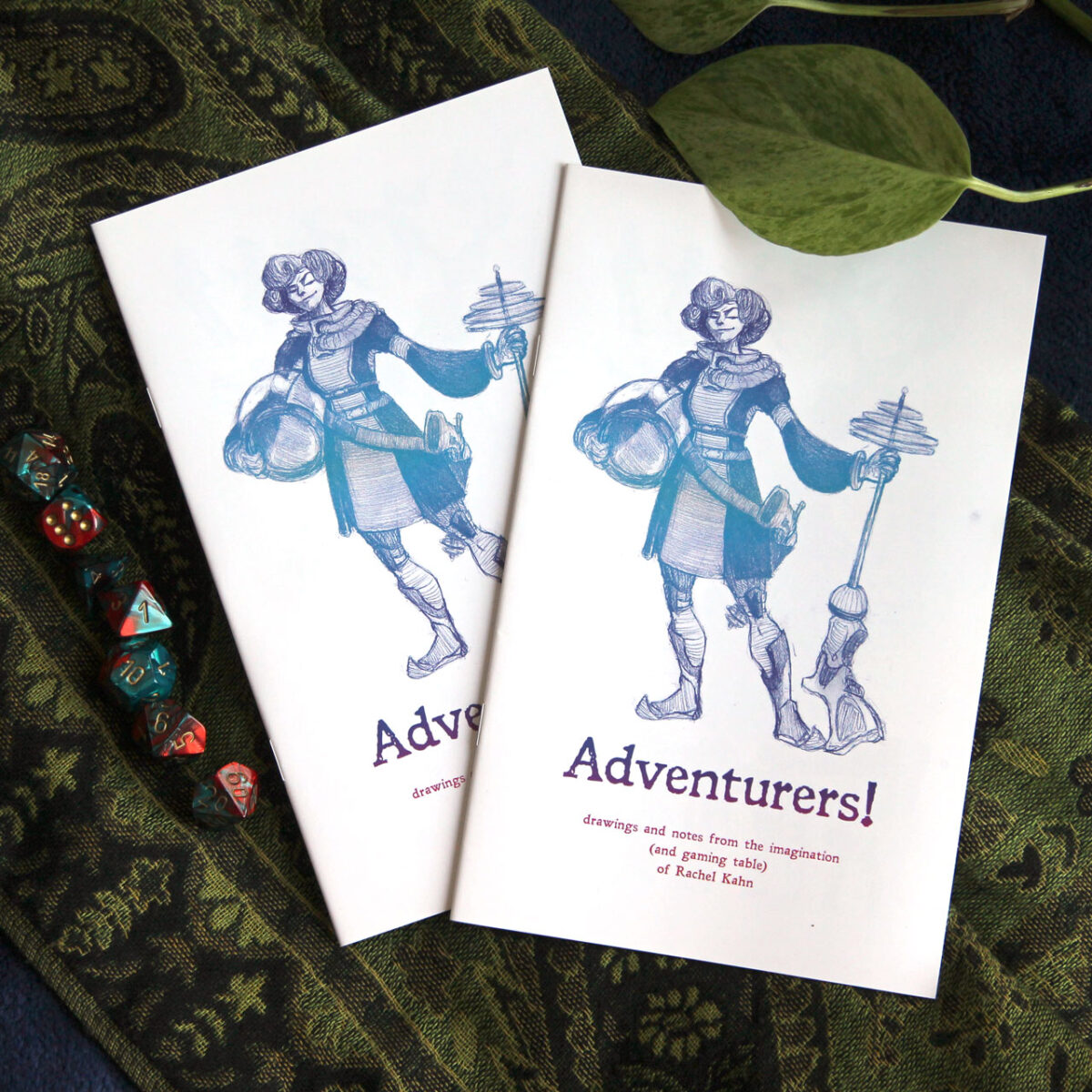
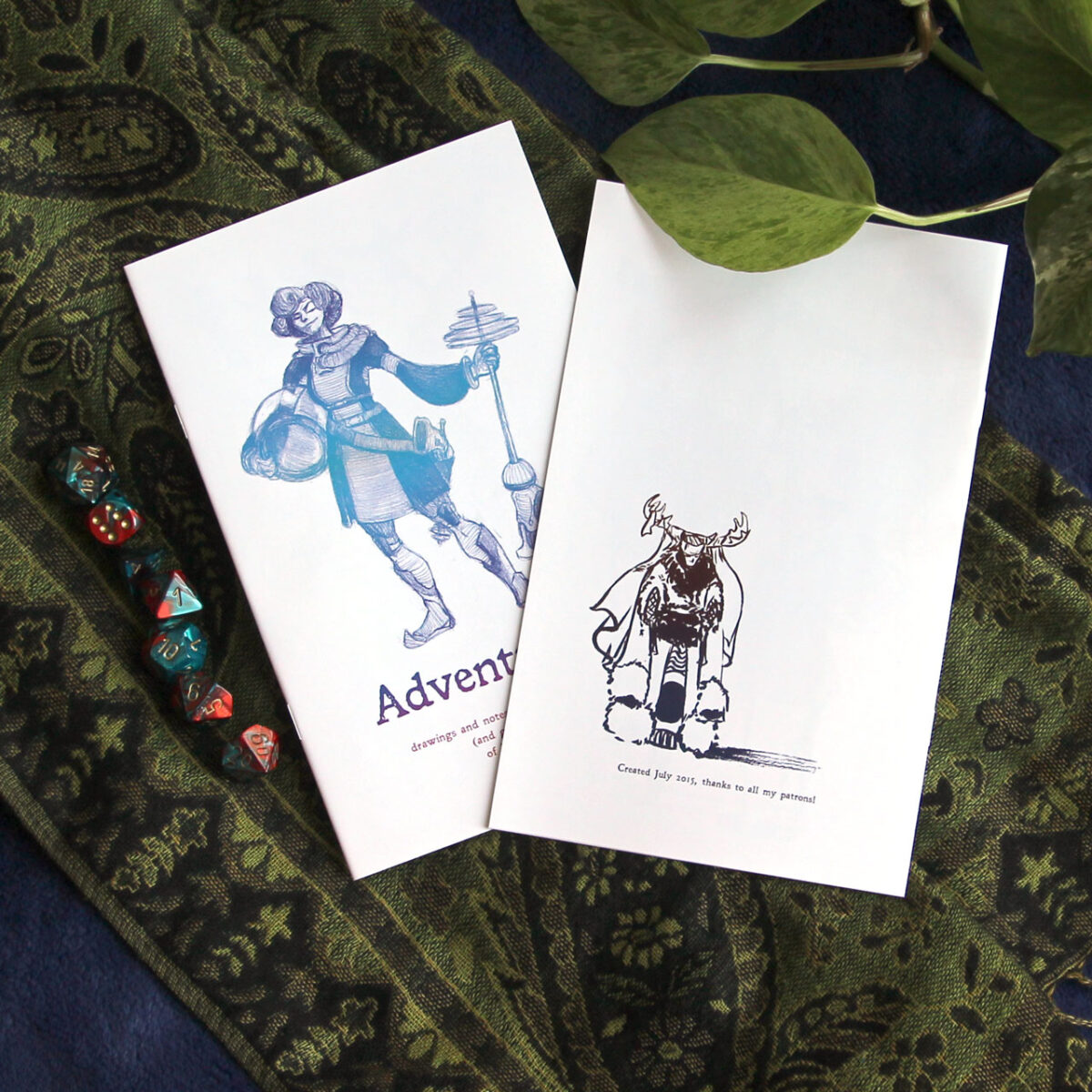
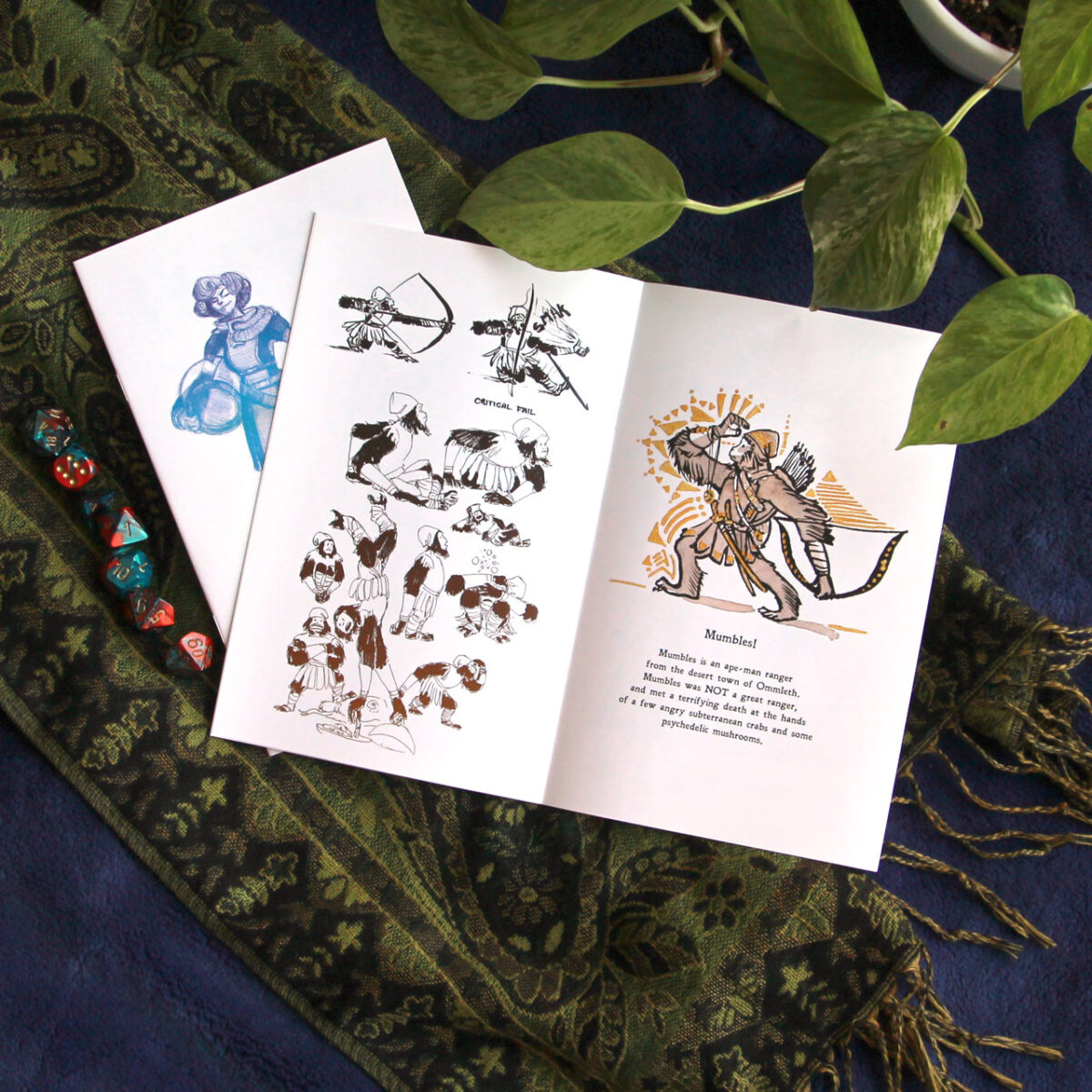
I created the Adventurers zine in 2015 as part of my old patreon, to collect some of my favourite character art from game sessions and story ideas. Featuring scifi, fantasy, and horror protagonists from games like Dungeons and Dragons, Trail of Cthulhu, Feng Shui, and Sword and Backpack.
Available as a PDF on my itch right here: https://sorcererscatalogue.itch.io/adventurers
Leave a Reply